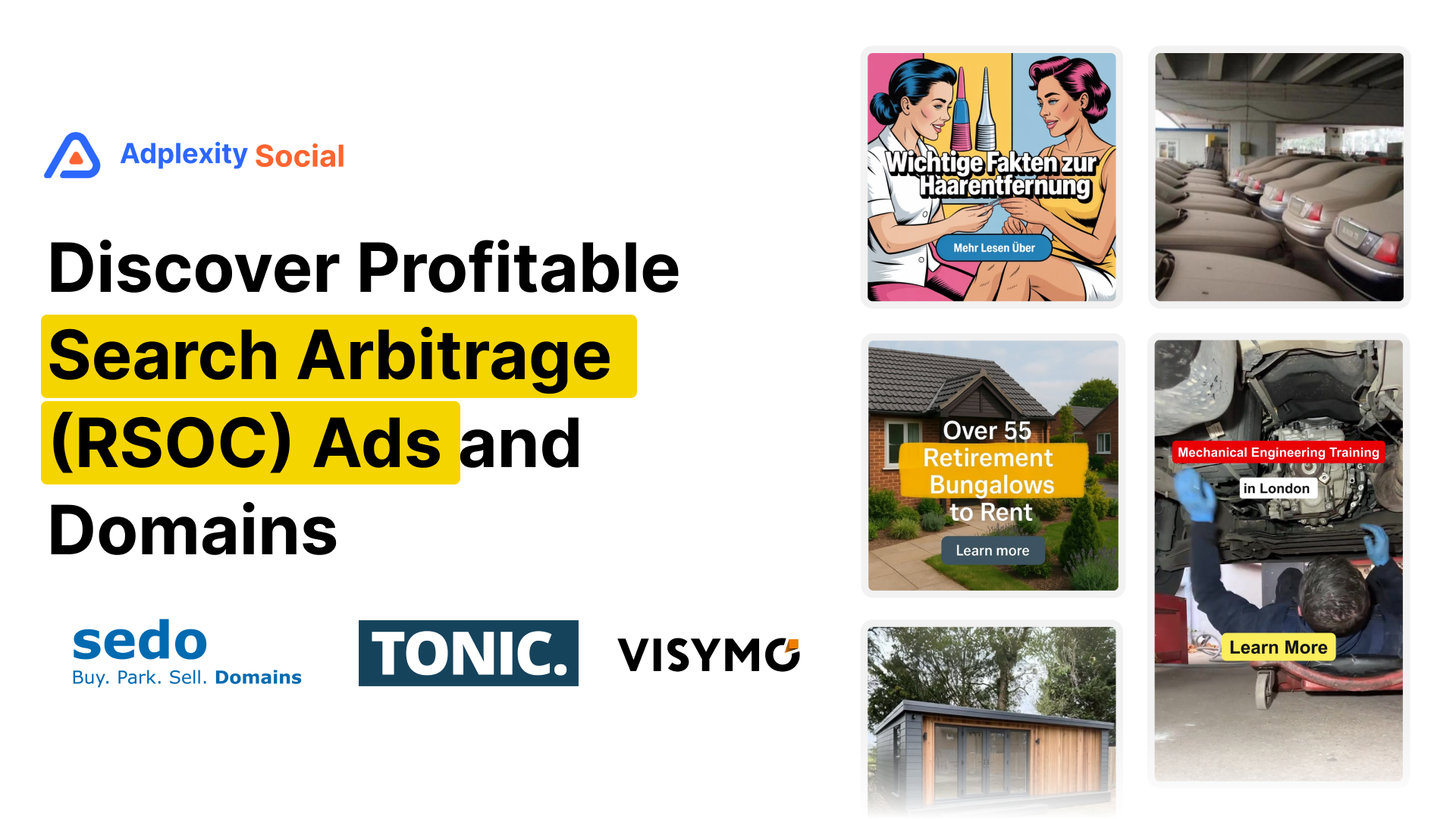

RSOC has become the dominant model in search arbitrage, and understanding which ads, domains, and verticals are winning is now more important than ever. This guide shows how to use AdPlexity Social to identify profitable RSOC campaigns, track scaling domains, spot creative patterns, and adapt to Google’s new compliance landscape using real market data.
Search arbitrage has changed a lot in the last few months. Google tightened compliance, AFD has nearly vanished, and RSOC (Related Search on Content) has become the dominant model for anyone running search arbitrage at scale.
This shift has opened the door for performance marketers who can track patterns, understand domains, and spot profitable ads early. The challenge is cutting through noise to find what’s actually working today, not last month.
Here’s a clear framework for doing exactly that using AdPlexity Social.
Start With the RSOC Filters
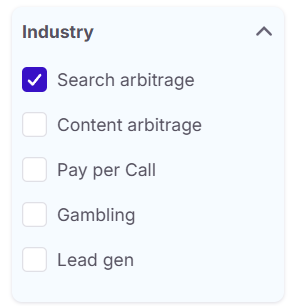
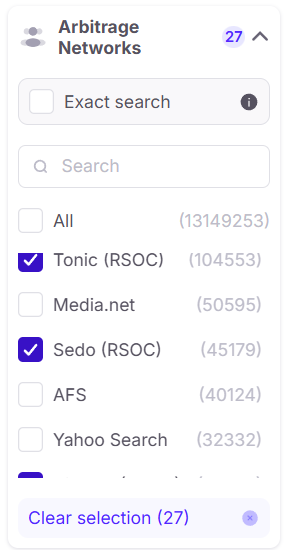
Inside AdPlexity Social, you can filter directly by the major RSOC feeds:
- Tonic RSOC
- Sedo RSOC
- Visymo RSOC
- Predicto / Compado
- And smaller networks
This immediately narrows your view to real RSOC activity rather than mixed arbitrage traffic or outdated flows.
Across 30 million ads collected in the last 30 days, more than 600,000 belong to RSOC. You’re starting from a rich sample.
Cut Out Losing Tests With “Days Running”
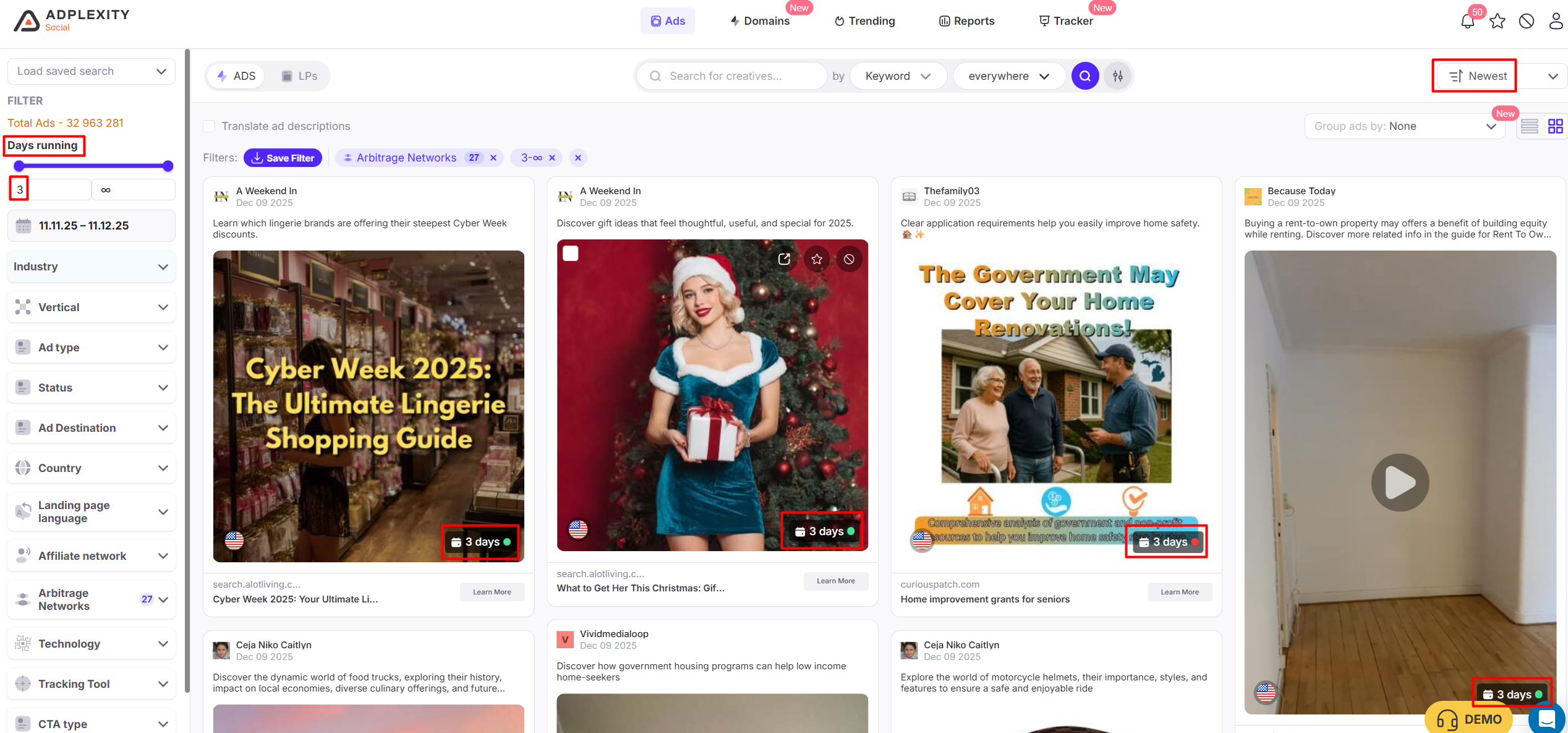
RSOC buyers launch a massive number of ads, but most do not make it past the testing phase.
Use:
- Days Running > 3 to remove losing tests
- Days Running > 5 if you want stricter confirmation
This simple step cuts the dataset by roughly half and leaves you with ads that have survived initial testing — meaning they’re far more likely to be profitable and suitable for scaling.
Identify the Vertical Clusters Driving Spend
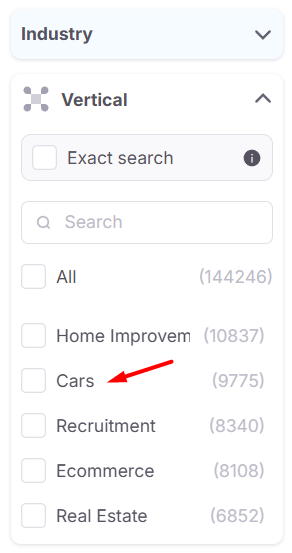
AdPlexity uses AI-based categorization across all RSOC ads. The top RSOC verticals right now are:
- Cars
- Travel
- Home improvement
- Health
- Real estate
Cars + travel consistently dominate spend in the U.S., followed by home services and broad-topic curiosity ads (“SUVs to avoid,” “New motorhomes under X price,” etc).
Filtering by vertical gives you instant clarity on where the real money is moving.
Analyze Keyword data
At Adplexity, we collect all the Search Arbitrage Keyword data. This way, you can analyze which are the Keywords that are winning in the space and cut the research time based on actionable data.
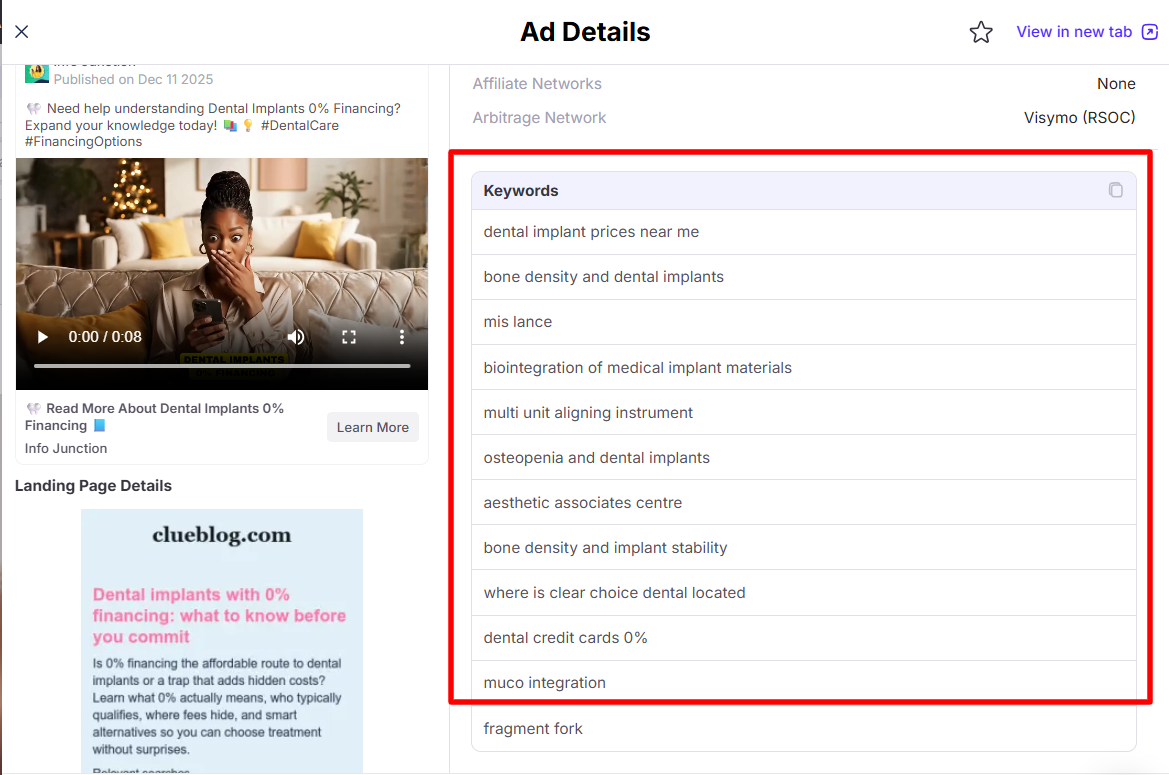
*TIP: You can simply copy the search keywords inside the ad details and use the same or similar ones.
Look at Ads Running in the Markets That Matter to You
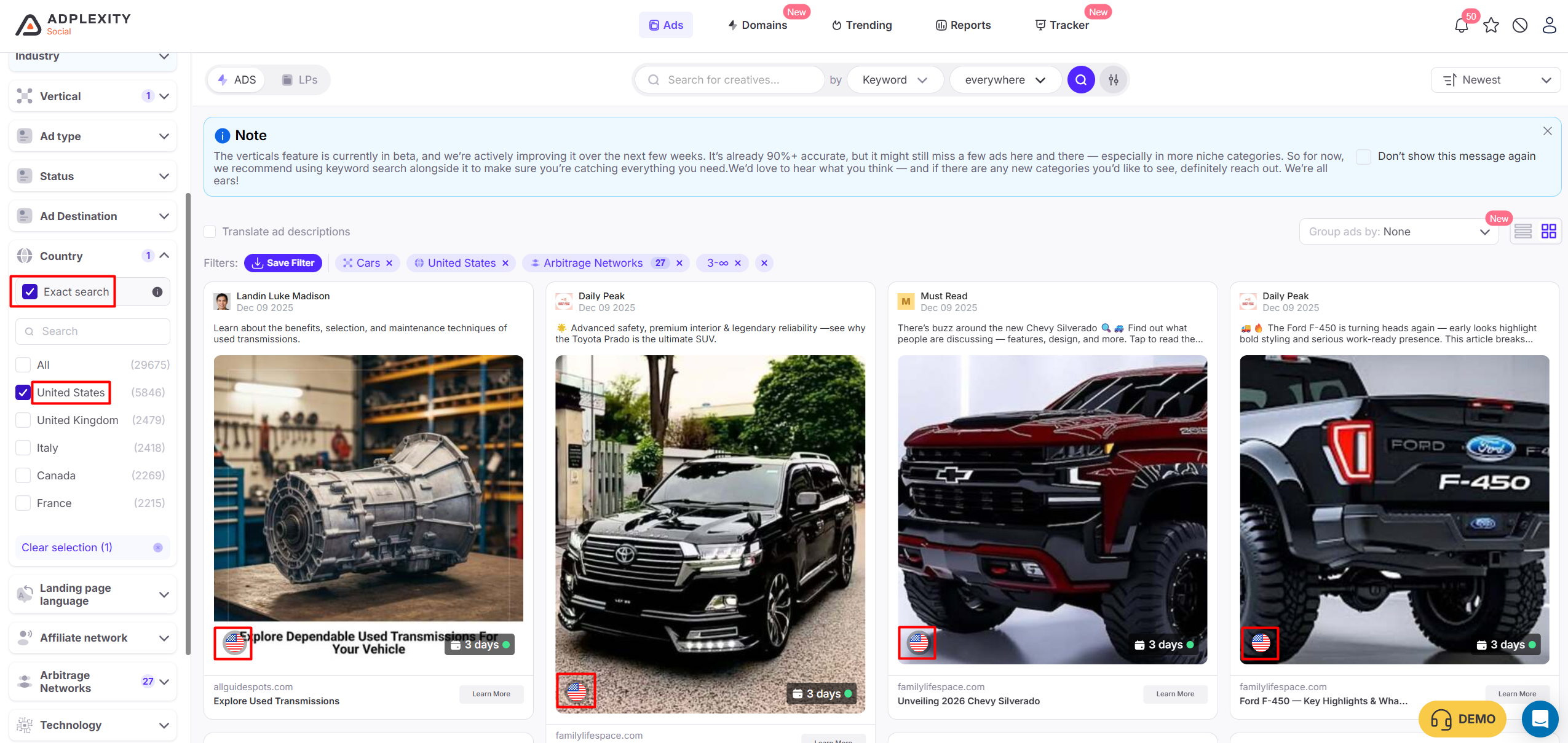
RSOC ads can literally be run anywhere in the world, but with the new regulations, country targeting is quite strict.
We see the most number of ads on GEOs like the US, UK, Canada, and tier 1 EU countries. These geos would definitely offer higher payouts, but also higher costs and competition.
*TIP – Use our exact match filter to remove all multi-geo campaigns and focus only on ads built for a specific country.
Country → US → Exact Match
Sort by Creative to Find True Winners
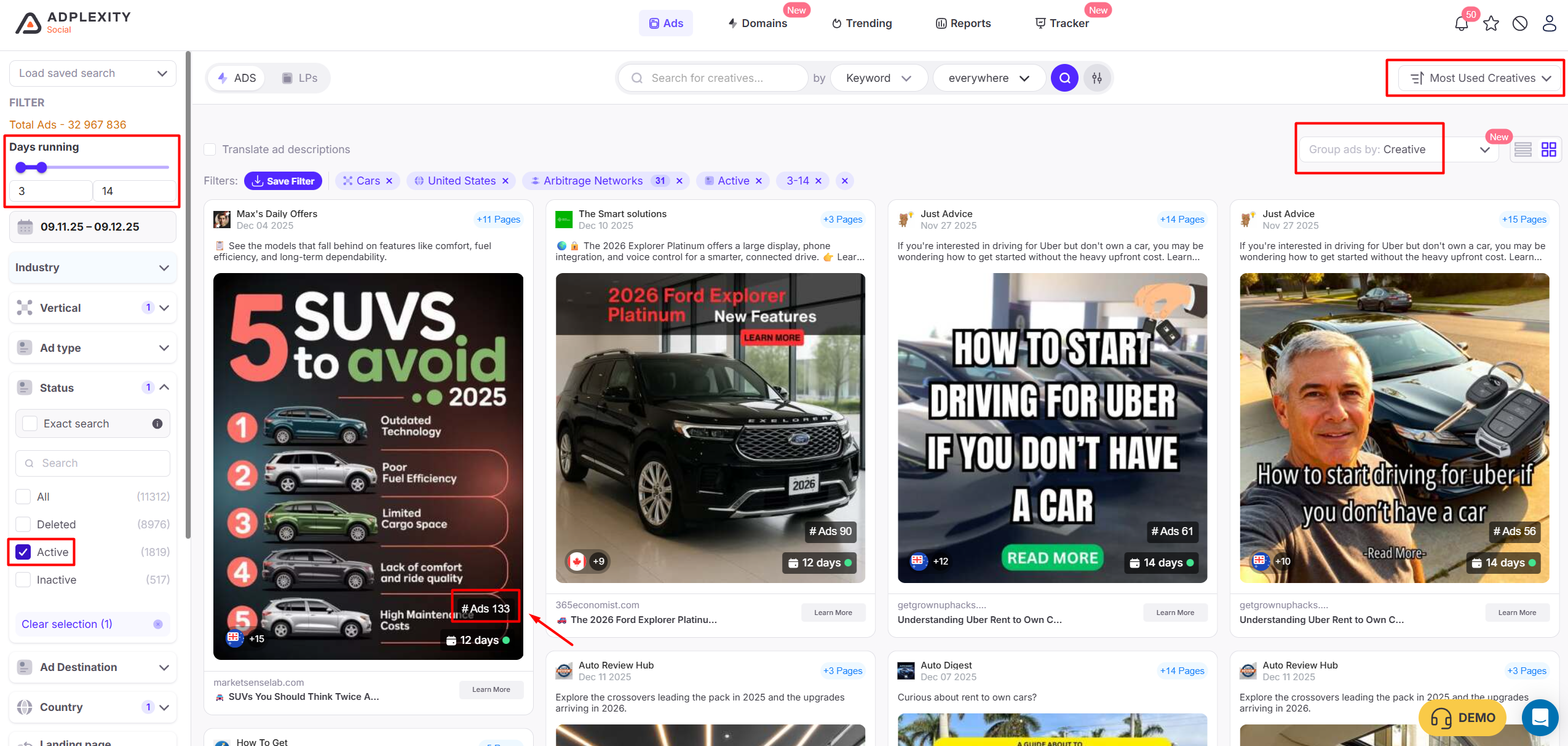
One of the strongest signals is Group Ads by Creative + Sort by Most Used.
If a creative:
- runs for several days,
- appears in dozens of ads,
- and is still active today,
Then you have a confirmed winning angle.
Example:
“5 SUVs to Avoid in 2025” → used across 80+ active ads by the same advertiser. That’s not random, it’s working.
This is how you reverse-engineer angles instead of guessing what works.
Use the Domains Tab to Spot the Biggest Players
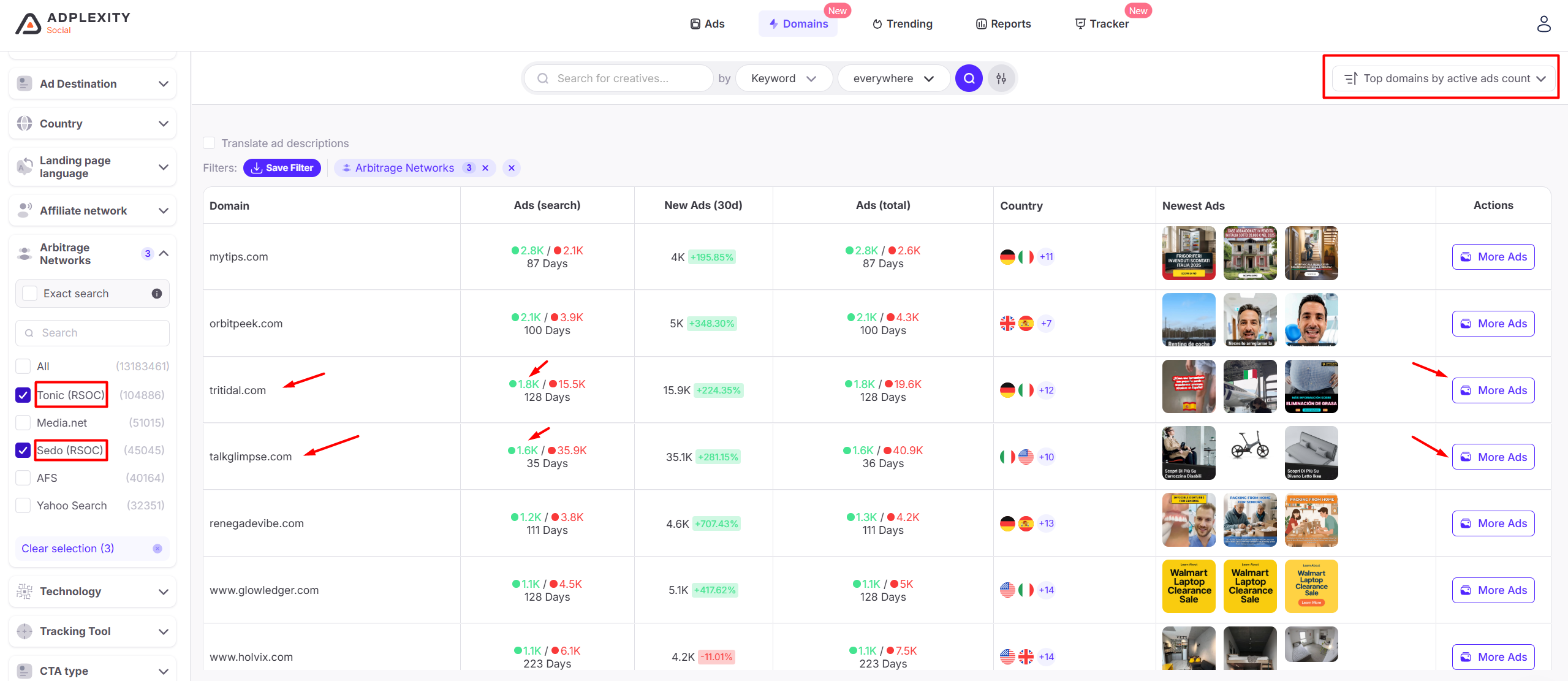
The Domains tab is where RSOC research really accelerates.
You can see:
- Which domains launched the most ads in the last 30 days
- How many are active right now
- Which feed they belong to (Tonic, Sedo, Visymo, etc.)
- Which geos do they run in
- What verticals they’re scaling
For example:
- talkingglimpse.com – 38,800 launched ads / 11,000 active
- tritidal.com – rapidly increasing ad volume
- allinfocenters.com – top Sedo performer
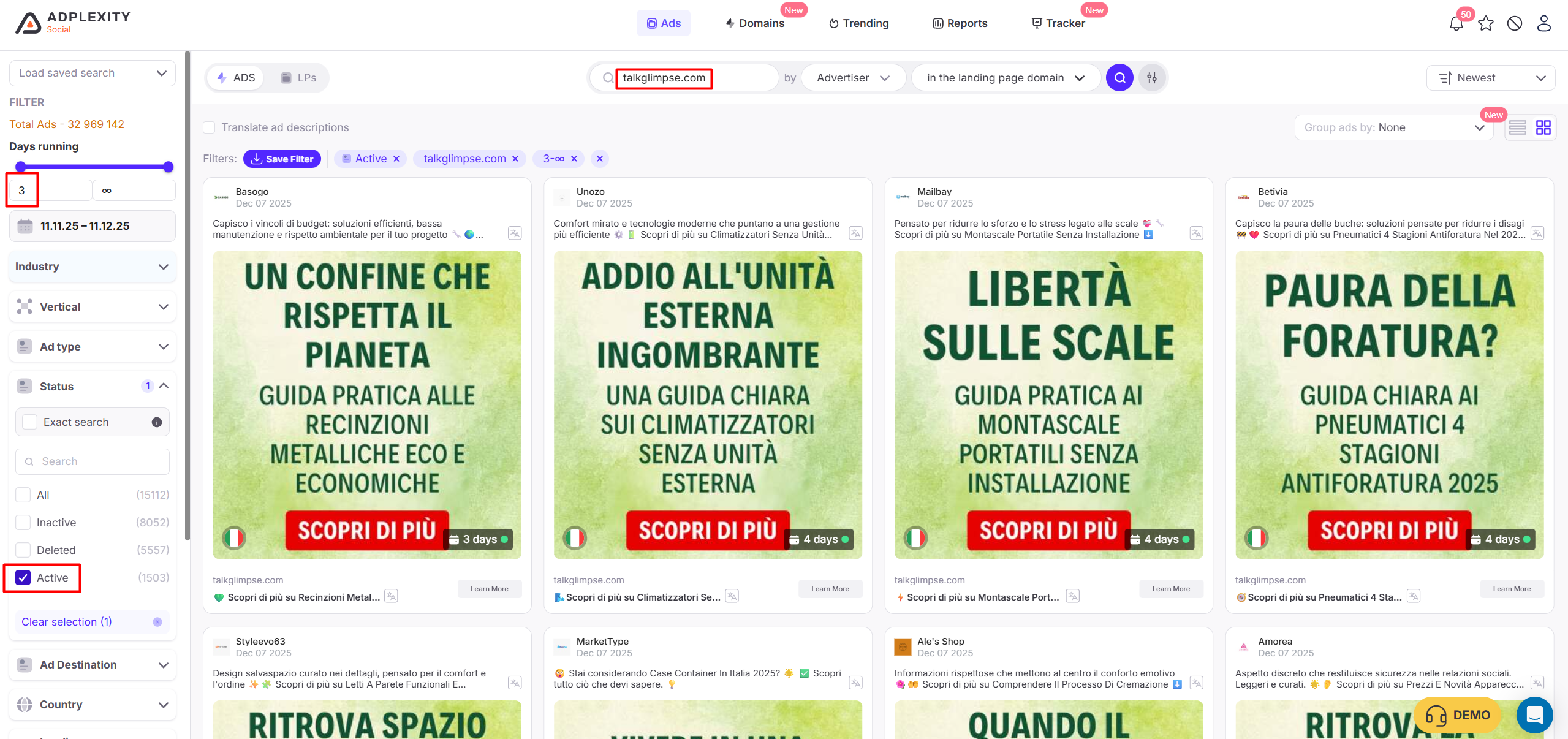
Open any domain → view all ads → filter by “Active” → you instantly see what is passing their internal testing framework.
This is one of the fastest ways to find RSOC profitability patterns.
Understand the Creative Shift After Google’s Compliance Updates
Since Google rolled out stricter RAF compliance:
- “Softer,” image-plus-headline formats dominate
- Text overlays replaced aggressive claims
This means more “vanilla” type of creatives, making it harder for marketers to leverage from high CTR from aggressive angles. But this is a must, since otherwise you have an increased risk of clawbacks and losing your relationship with your search feed.
Studying the current RSOC winners gives you the blueprint for compliant, scalable creative angles. If others are running less aggressive creatives for a significant amount of time, it means they are making profits.
Combine Keyword Search With Feed Filters
Going deeper, you can combine our filters. For example:
- Arbitrage Network = Sedo
- Keyword = “dental”
- Days Running > 3
Country: US
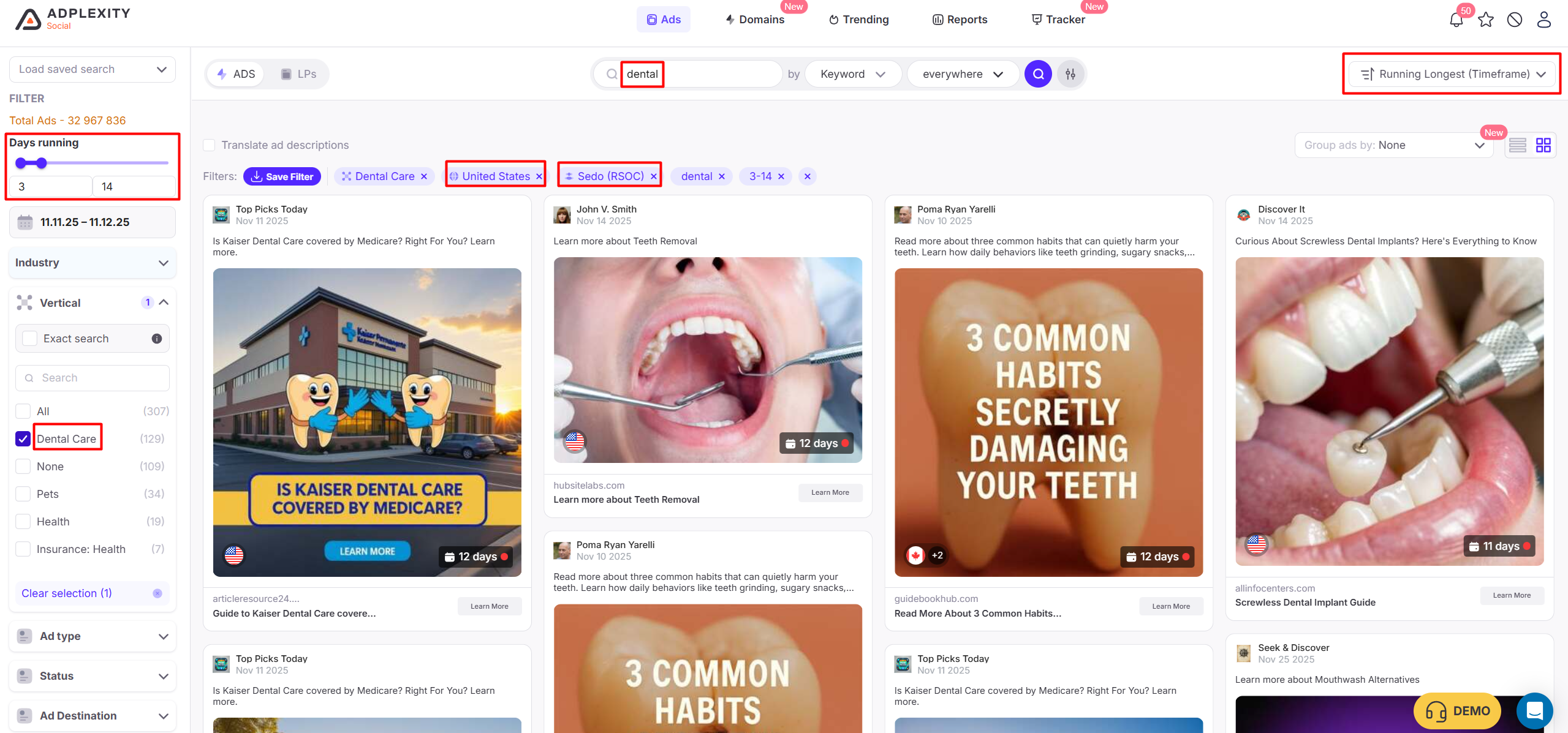
This gives you extremely targeted insight into a specific theme or niche inside RSOC.
Perfect for launching your own angle quickly without reinventing the wheel.
Build Daily Monitoring With Saved Filters
Inside AdPlexity Social:
- Build your RSOC preset
- Save it as a filter
- Reload it daily
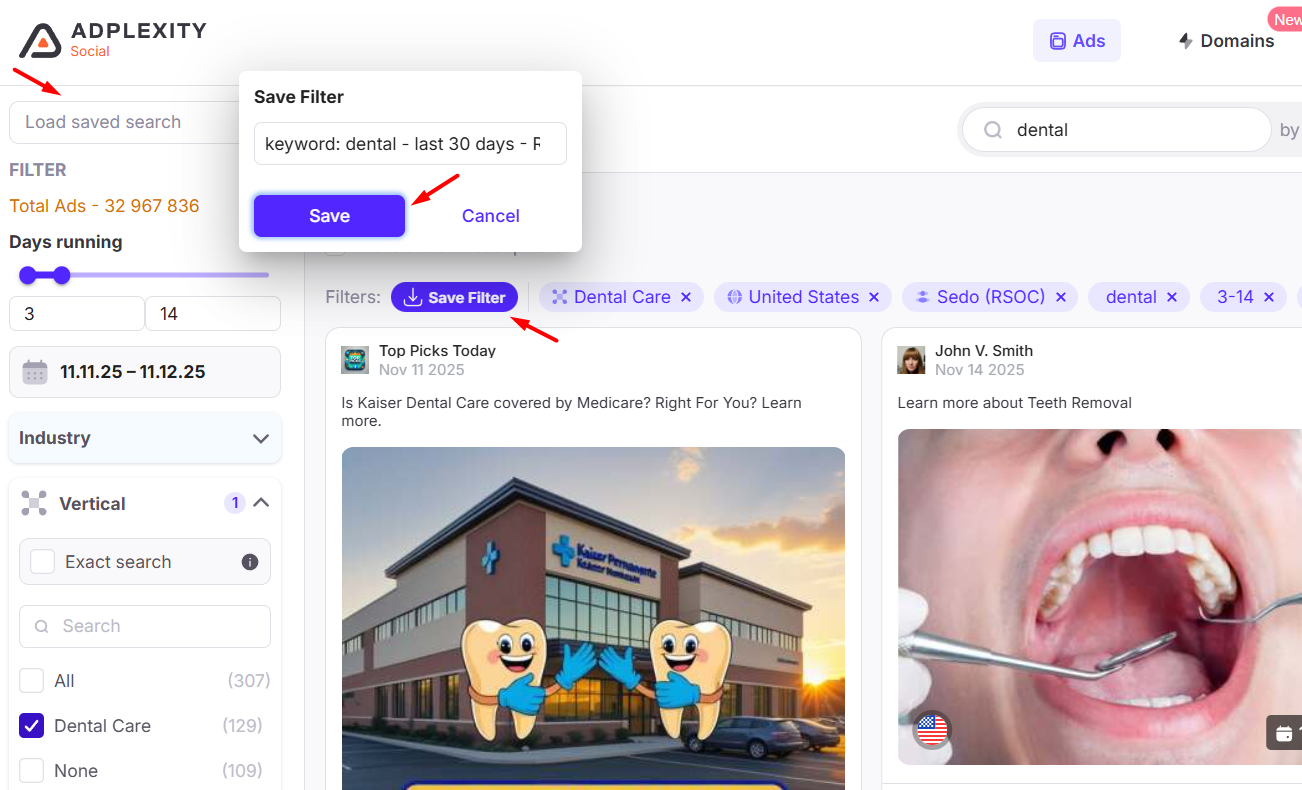
You get instant snapshots of:
- New ads
- Active ads
- Which ads passed testing
- Which domains are scaling
- Which creatives spiked in usage
This removes guesswork and helps you move early on emerging patterns.
Final Takeaway
RSOC requires speed, clarity, and constant adaptation. But once you strip away losing tests and focus on repeated patterns, the winning ads become obvious.
AdPlexity Social lets you:
- Track RSOC ads in real time
- Identify standout creatives
- See scaling domains
- Map vertical patterns
- Extract real keywords from real campaigns
If you’re running RSOC today, this workflow gives you a practical, data-driven foundation — not speculation.